
Dental emergencies rarely happen at convenient times. A tooth knocked out during a weekend football match, a sudden throbbing pain that keeps you up all night, or a broken filling on a busy workday — these moments can be alarming, and how you respond in the first hour or two often determines whether the tooth can be saved. Knowing the warning signs of a true dental emergency helps you act quickly and protect your long-term oral health. Here are five clear signs you need an emergency dentist right away.
1. Severe, Persistent Toothache
Mild tooth sensitivity that comes and goes is usually not an emergency — but a sharp, throbbing, persistent toothache is. Pain that wakes you up at night, intensifies when you lie down, or radiates to your jaw, ear, or temple is often a sign of a deep infection inside the tooth’s nerve chamber.
This kind of pain typically means the pulp — the soft tissue containing nerves and blood vessels at the center of your tooth — is inflamed or infected. Left untreated, the infection can spread to surrounding bone and even into the bloodstream, which is dangerous. A dentist can quickly diagnose the cause through an exam and X-rays, and may perform root canal treatment or extraction to relieve pain and stop the infection.
While you wait for your appointment, rinse with warm salt water, take an over-the-counter pain reliever your dentist or pharmacist approves, and avoid hot or cold foods on the affected side. Do not place aspirin directly on the gum — it can burn the tissue.
2. A Knocked-Out Tooth
A fully knocked-out (avulsed) permanent tooth is one of the most time-sensitive dental emergencies. If you act within 30 to 60 minutes, there is a real chance the tooth can be successfully re-implanted. After two hours, the success rate drops significantly.
Here is what to do: pick up the tooth by the crown (the white chewing surface) — never by the root. Rinse it gently with cold milk or saline if it is dirty, but do not scrub it, dry it, or wrap it in tissue. If possible, place it back into the socket and bite down on a clean cloth to hold it in place. If reinsertion isn’t possible, store the tooth in a small container of cold milk, saliva, or a tooth preservation solution. Then head directly to a dental clinic or emergency dental service.
For children with knocked-out baby teeth, do not try to reinsert them — call your dentist for guidance instead.
3. Cracked, Chipped, or Broken Tooth
A small chip on a tooth may seem like a cosmetic issue, but cracks and breaks should be assessed by a dentist as soon as possible — especially if there is pain, bleeding, or visible damage to the inner layers of the tooth.
A deeper crack can expose the dentin or pulp, leading to bacterial infection if left open to the mouth. Sharp edges can also cut your tongue or cheek. Larger fractures sometimes extend below the gumline, which complicates treatment dramatically the longer they go unaddressed.
Until you see a dentist, rinse your mouth with warm water, apply a cold compress to the outside of your cheek to reduce swelling, and avoid biting on that side. If you can find any tooth fragments, bring them to your appointment.
4. Swelling, Pus, or a Painful Bump on Your Gums
A swollen face, jaw, or gum, especially when combined with a foul taste, fever, or visible bump, is a strong sign of a dental abscess. An abscess is a pocket of pus caused by bacterial infection, and it is a serious condition. Dental abscesses do not resolve on their own — even if the pain temporarily fades, the infection is still spreading.
Untreated abscesses can lead to bone loss, systemic infection, and in rare cases life-threatening complications such as Ludwig’s angina (a serious infection of the floor of the mouth). Difficulty breathing or swallowing along with facial swelling is a medical emergency that needs hospital attention immediately.
Same-day dental care is essential. Your dentist will likely drain the abscess, prescribe antibiotics if appropriate, and plan definitive treatment such as a root canal or extraction.
5. Bleeding That Won’t Stop
Some bleeding after a dental procedure or minor mouth injury is normal and usually settles with light pressure within 10 to 20 minutes. But bleeding that continues beyond that — or comes from a deep cut on the tongue, lips, or gums — needs urgent attention.
Heavy bleeding from the gums without injury can also signal advanced gum disease, a blood clotting issue, or rarely, a more serious medical condition. While you arrange care, apply firm pressure with a clean gauze or moist tea bag (the tannins help blood clot), keep your head elevated, and avoid rinsing forcefully.
Other Situations That Need Quick Attention
Beyond these five core emergencies, a few other situations warrant a quick visit: a lost filling or crown that exposes a sensitive tooth, a broken denture or bridge that affects eating and speech, orthodontic wires poking into your cheek and causing sores, or food stuck between your teeth that you cannot remove and is causing pain.
How to Prepare Before an Emergency Happens
Save the phone number of a trusted dental clinic that offers emergency or extended-hours service. In Dubai, many clinics have flexible scheduling that can accommodate urgent cases the same day. Knowing where to call before something happens removes one stressful step from an already stressful moment.
You can also reduce your emergency risk by wearing a mouthguard during contact sports, avoiding chewing on ice or hard candy, treating cavities early before they become painful, and getting regular check-ups so small problems are caught before they turn into emergencies.
When in Doubt, Call
If you are not sure whether your situation qualifies as an emergency, call a dental clinic anyway. The team can ask the right questions, advise you on what to do in the meantime, and decide whether you need to be seen immediately or whether you can wait for a routine appointment. Your teeth are worth that call — and your future smile depends on what you do in the next few hours.
Related care at Anytime Dental
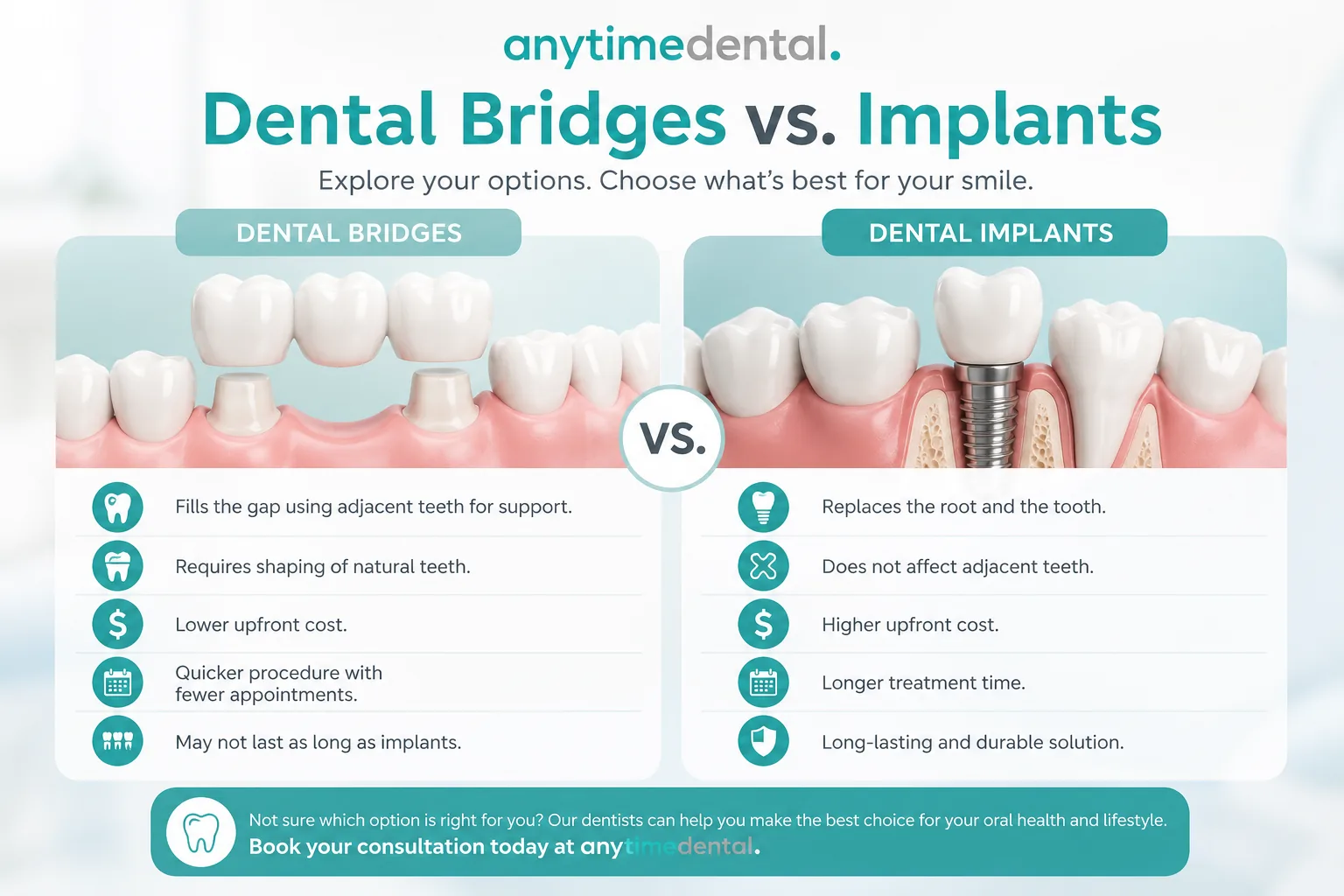
Related treatments at our clinics: dental implants.
Read more about Root Canal Treatment and Tooth Extraction. You can visit our Filipino-speaking dentists at our Deira (Al Rigga) clinic or our Barsha Heights clinic, open daily from 10 AM to 9 PM. Your first consultation is free.