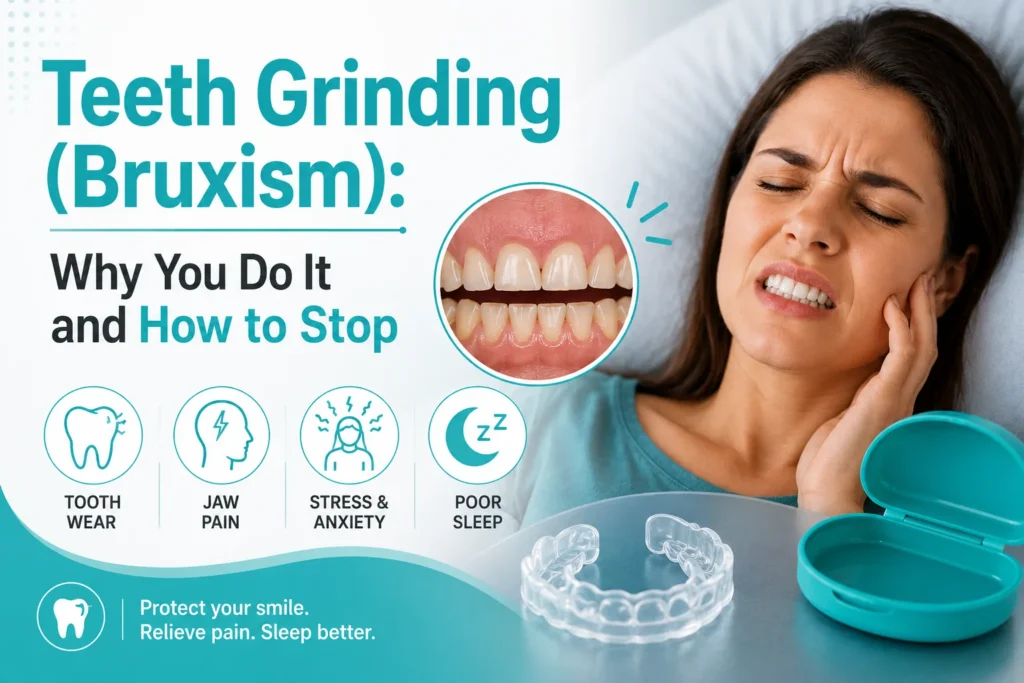
Most people who grind their teeth do not know they do it. It usually happens at night, while you sleep, and the only clues are subtle: a dull jaw ache in the morning, worn-down teeth, or a partner who complains about the noise.
Teeth grinding (medically known as bruxism) is one of the most common dental conditions we see at Anytime Dental in Dubai, and one of the most damaging if left untreated.
How common is it?
Studies estimate that 8 to 10% of adults grind their teeth regularly, and the number jumps to 15 to 20% in stressful work environments. In children, it is even more common, though most kids grow out of it.
Signs you might be grinding your teeth
- Waking up with a sore jaw, headache, or earache
- Flattened, chipped, or worn-down teeth
- Tooth sensitivity that comes and goes
- Tight, sore facial muscles
- A clicking jaw joint
- A partner who notices grinding sounds at night
- Indentations on the sides of your tongue
Why people grind
Stress and anxiety. The most common cause. Work pressure, financial worries, or major life changes often translate into night-time grinding.
Sleep disorders. Bruxism is strongly linked to sleep apnea. If you grind AND snore loudly AND feel exhausted in the morning, get evaluated for sleep apnea as well.
Bite misalignment. If your teeth do not come together evenly, the muscles can search for a comfortable position, often by grinding.
Caffeine, alcohol, and stimulants. All can increase grinding intensity at night.
Certain medications. Some antidepressants list bruxism as a side effect.
What happens if you ignore it
- Worn enamel exposes the softer dentin layer, leading to sensitivity and decay.
- Cracked or chipped teeth often require crowns or even extractions.
- TMJ disorders develop from constant strain on the jaw joint.
- Chronic headaches become a daily thing.
- Damaged veneers, crowns, or fillings that need expensive replacement.
How to stop (or at least manage) it
1. Get a custom night guard. This is the gold standard. A custom-fitted guard from your dentist absorbs the grinding force and protects your teeth.
2. Reduce stress. Easier said than done, but stress management is genuinely one of the most effective long-term fixes.
3. Cut evening caffeine and alcohol. Both make grinding worse. No coffee after 2 pm.
4. Treat the underlying cause. If sleep apnea is the driver, get a sleep study. If bite misalignment is the issue, orthodontics can help.
5. Botox (in serious cases). For severe bruxism, small injections of Botox into the jaw muscles can dramatically reduce the force of grinding.
When to see a dentist about grinding
If you have any of the signs listed above, do not wait. Bruxism damage is cumulative, and a night guard costs a tiny fraction of replacing worn-down or cracked teeth.
Book an exam at Anytime Dental in Dubai. We will check your teeth for grinding patterns and fit you with a custom guard if needed.
Related care at Anytime Dental
Related treatments at our clinics: current offers.
Read more about Dental Crowns and all our dental services. You can visit our Filipino-speaking dentists at our Deira (Al Rigga) clinic or our Barsha Heights clinic, open daily from 10 AM to 9 PM. Your first consultation is free.