For most of us, the dentist is the person who keeps our smile healthy and our teeth functional. What you might not know is that your dentist is also keeping an eye on your heart. Decades of research now confirm that what happens in your mouth doesn’t stay in your mouth — there’s a real, measurable link between oral health and cardiovascular disease. Understanding this connection is one of the most powerful reasons to take your brushing, flossing, and regular check-ups seriously.
The Mouth-Body Connection
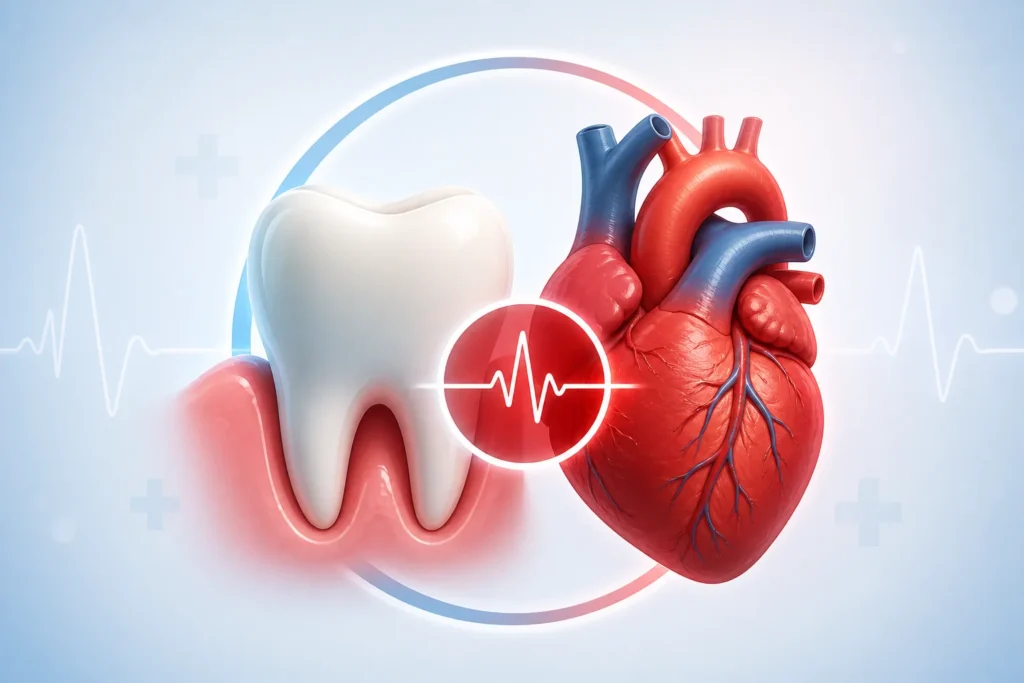
The mouth is the entry point to the rest of your body. The same blood vessels that supply your gums and teeth also feed your heart, lungs, and brain. When harmful bacteria build up under inflamed gum tissue, they don’t just sit there — they enter the bloodstream and travel throughout your body. This bacterial “leak” is one of several mechanisms scientists believe connects oral health to systemic disease.
Chronic gum disease (periodontitis) is the main culprit. In its advanced stages, periodontitis creates pockets between the teeth and gums where billions of bacteria thrive. The body’s immune response to this infection produces a low-level, persistent inflammation that affects the entire cardiovascular system.
What the Research Shows
Studies from cardiology and dental research institutions have consistently found that people with moderate to severe gum disease are at higher risk for:
Coronary artery disease. The inflammation triggered by oral bacteria appears to contribute to the buildup of plaque in arteries, increasing the risk of heart attacks. Some studies have actually found oral bacteria embedded in arterial plaques.
Stroke. Patients with periodontal disease have been shown to have higher rates of ischemic stroke, the most common type, caused by blocked blood flow to the brain.
Endocarditis. This is an infection of the inner lining of the heart, usually involving the heart valves. Oral bacteria from the mouth can enter the bloodstream during routine activities like brushing — especially with bleeding gums — and lodge in damaged heart tissue.
High blood pressure. Several studies suggest that chronic gum inflammation may make hypertension harder to control.
It’s important to be clear: gum disease doesn’t single-handedly cause heart disease. The two share many of the same risk factors — age, smoking, diabetes, poor diet, and stress. But healthy oral habits are now considered one piece of a heart-healthy lifestyle, alongside exercise, diet, and not smoking.
Warning Signs That Affect Both
Several oral symptoms should make you think about your heart, not just your mouth:
Persistent bleeding gums during brushing or flossing. Loose or shifting teeth in adulthood. Bad breath that doesn’t go away with normal hygiene. Receding gums or teeth that look longer than they used to. A persistent bad taste in your mouth.
If you have any of these along with general health risk factors like high blood pressure, high cholesterol, or a family history of heart disease, your dentist may want to coordinate with your primary care physician.
Diabetes and Gum Disease: A Critical Triangle
Diabetes deserves special mention because it sits at the intersection of oral and cardiovascular health. People with poorly controlled diabetes are far more likely to develop severe gum disease, and severe gum disease in turn makes blood sugar even harder to control. Both conditions independently raise cardiovascular risk, so the combination is particularly dangerous. Good oral care is a meaningful tool for managing diabetes, and good diabetes management makes gum health much easier to maintain.
What Your Dentist Looks For
During a routine exam, your dentist is doing more than counting teeth. They check the depth of gum pockets, look for inflammation, signs of recession, mobility, and how your bite affects the surrounding tissues. They take note of any chronic inflammation that might indicate broader health concerns.
If gum disease is found, treatment is straightforward at any stage: better home care, professional cleanings, and for moderate or severe cases, deeper procedures like scaling and root planing or even surgical intervention. Stopping the infection in your mouth helps stop the inflammation cycle that affects your whole body.
What You Can Do at Home
The same habits that protect your gums also protect your heart:
Brush twice a day for two minutes. Use a soft-bristled brush and fluoride toothpaste, with gentle circular motions along the gumline.
Floss daily. This is the single most important habit for gum health. Without flossing, you miss roughly a third of every tooth surface.
Don’t skip dental visits. A professional cleaning every six months removes hardened tartar that home care can’t touch.
Don’t smoke. Tobacco is the single strongest modifiable risk factor for both gum disease and heart disease.
Manage stress and sleep. Both affect your immune system and your body’s ability to control inflammation.
Eat for inflammation control. A diet rich in vegetables, fruits, lean proteins, omega-3s, and whole grains supports both your gums and your heart. Sugar and refined carbs feed cavity-causing bacteria and contribute to systemic inflammation.
Special Situations to Discuss with Your Dentist
If you have a known heart condition — particularly mitral valve prolapse, an artificial heart valve, or a history of endocarditis — let your dentist know before any procedure. In certain cases, your cardiologist may recommend prophylactic antibiotics before dental work to prevent bacteria from causing infection in vulnerable heart tissue. These guidelines have narrowed over the years and don’t apply to everyone, but it’s a conversation worth having.
The Takeaway
Brushing your teeth is not just about a bright smile or fresh breath. It’s a small, daily act of care that ripples outward, supporting one of the most important systems in your body. If you’ve been delaying a dental check-up, this is a good reason to book one. Healthy gums are part of a healthy heart — and you only get one of each.
Related care at Anytime Dental
Read more about Scaling & Polishing and Teeth Cleaning. You can visit our Filipino-speaking dentists at our Deira (Al Rigga) clinic or our Barsha Heights clinic, open daily from 10 AM to 9 PM. Your first consultation is free.