If your dentist has ever told you that a tooth needs a crown, you might have left the appointment with more questions than answers. What exactly is a crown? Why is it the right treatment? What is it made of, and how long will it last? Crowns are one of the most common restorations in modern dentistry, and understanding how they work helps you make confident decisions about your care.
What Is a Dental Crown?
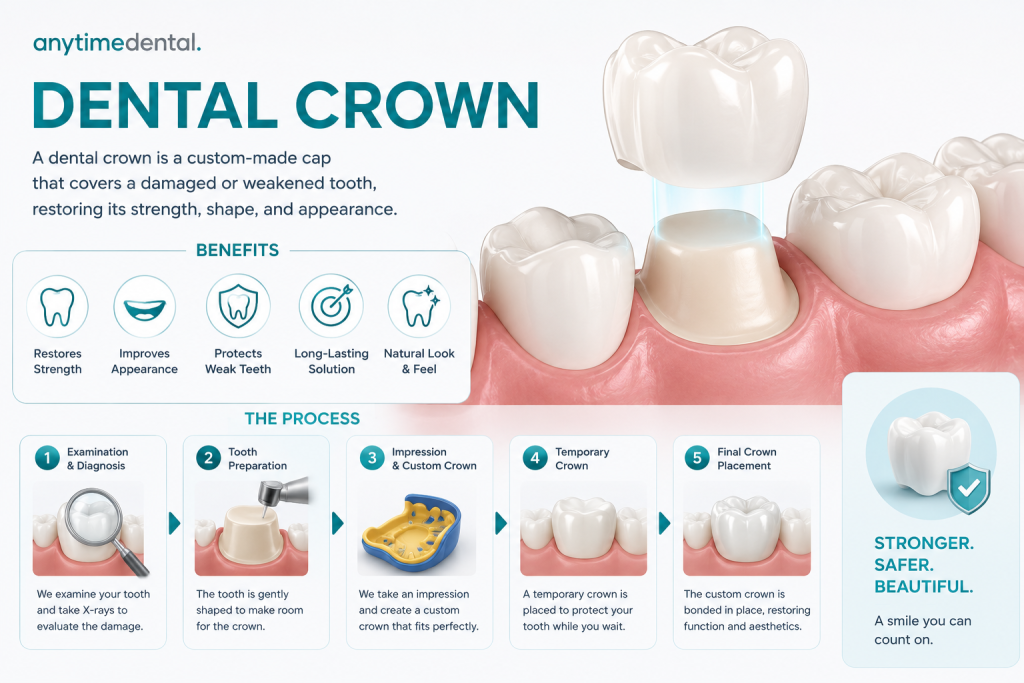
A dental crown is a custom-made “cap” that covers a tooth entirely from the gumline up. It restores the tooth shape, size, strength, and appearance, protecting what is left of the natural tooth underneath. Once cemented in place, a crown becomes the new visible chewing surface.
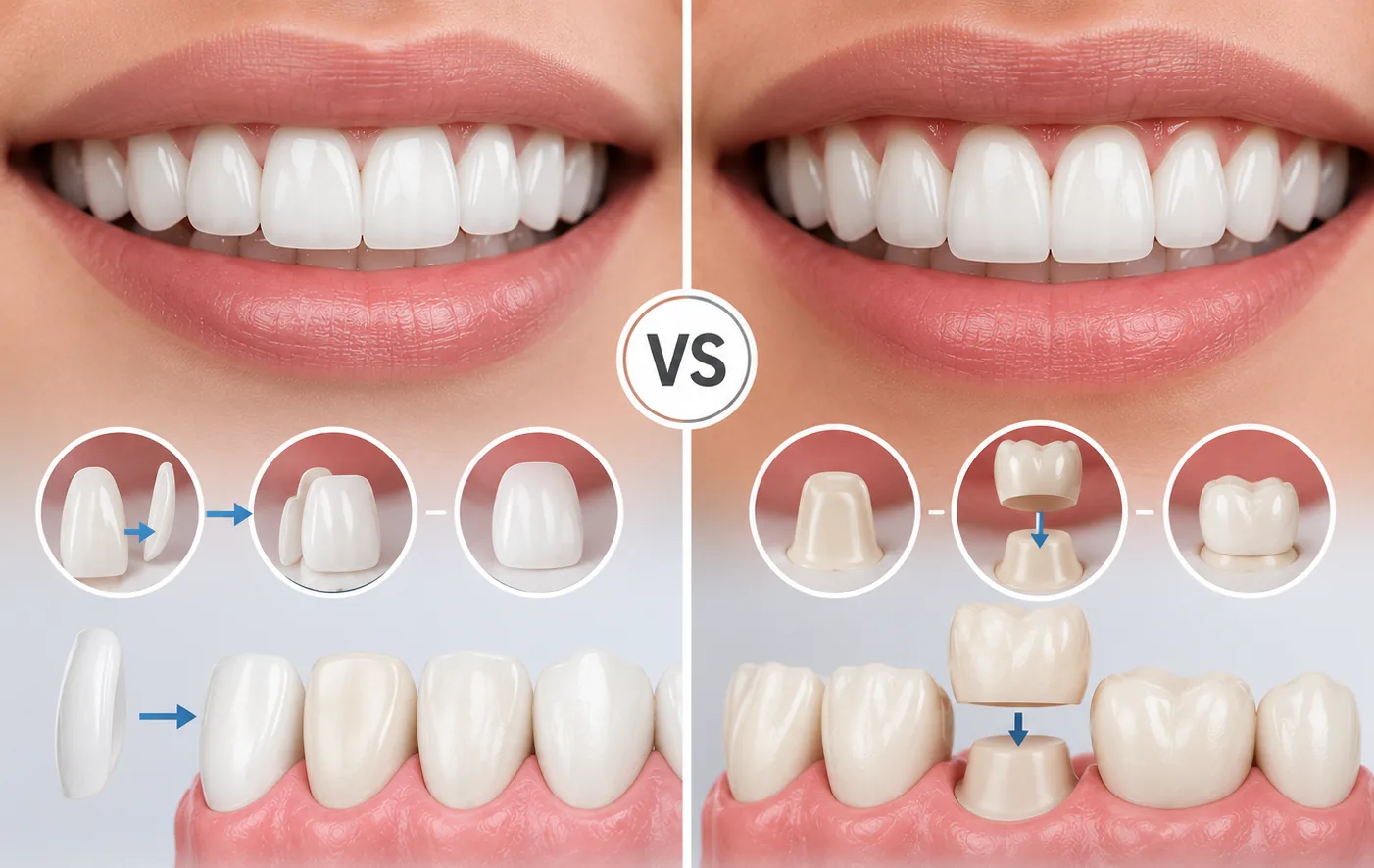
Crowns are different from veneers, which only cover the front surface of a tooth and are primarily cosmetic. A crown is structural — it holds the tooth together.
When Is a Crown the Right Treatment?
After a root canal. A tooth that has had root canal treatment is more brittle. A crown protects it from fracture and seals it against infection.
For a tooth with a large filling. When too much natural tooth structure is missing, the remaining tooth is too weak to function reliably. A crown distributes biting forces evenly.
For a cracked or fractured tooth. Cracks that extend below the chewing surface need full coverage to keep the crack from spreading.
For severely worn teeth. Years of grinding or acid erosion can wear teeth down to short, sensitive stumps. Crowns restore the original tooth height.
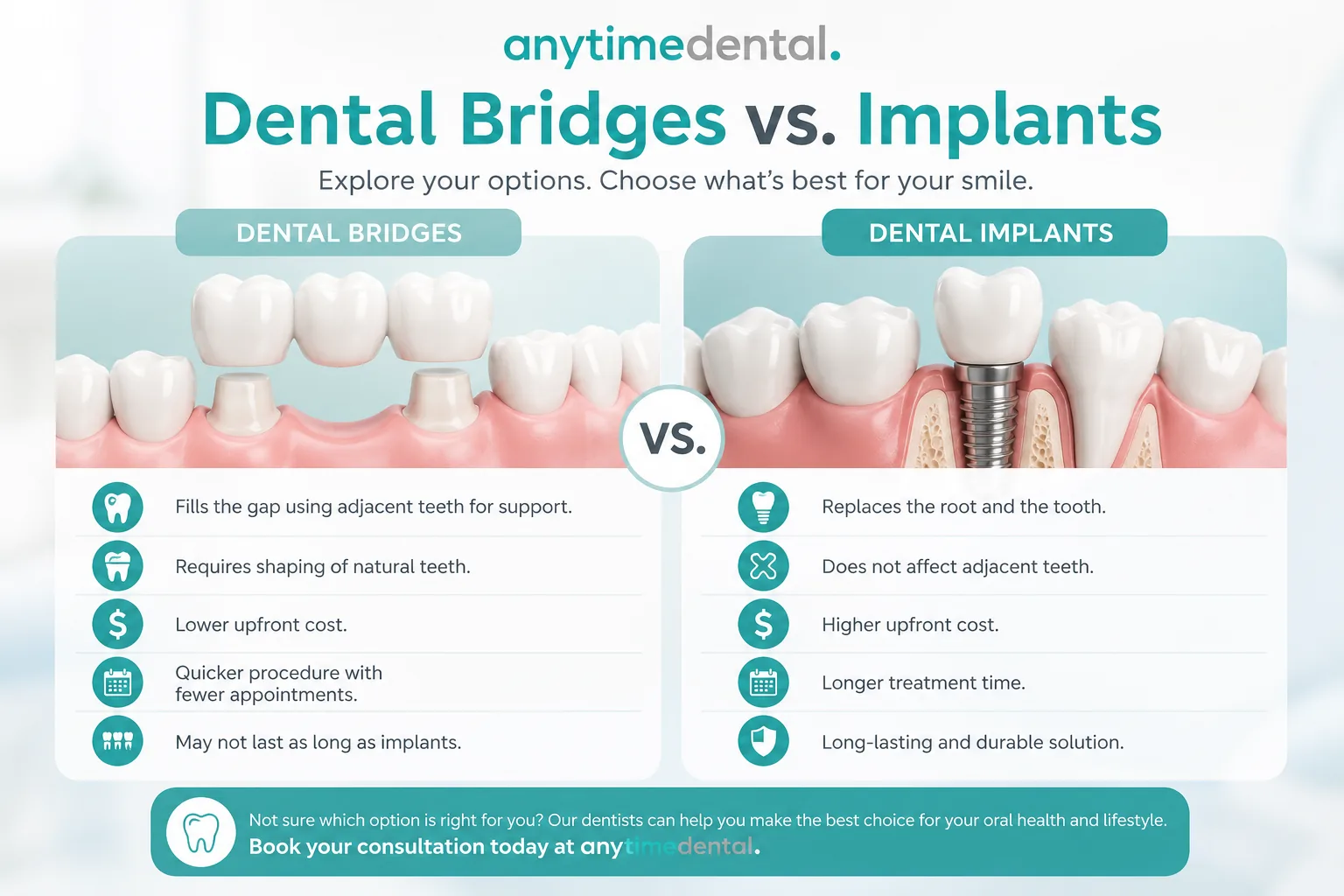
To support a bridge. Crowns anchor a fixed bridge onto the teeth on either side of a gap.
To complete a dental implant. The final visible tooth on an implant is a crown attached to the implant post.
For cosmetic concerns. Occasionally crowns are used to dramatically change the shape, length, or color of a damaged tooth where veneers are not enough.
The Materials: Choosing the Right Crown
All-ceramic (porcelain) crowns. The most popular choice for front teeth because they look beautifully natural. Modern ceramic materials like e.max and zirconia are also remarkably strong.
Zirconia crowns. A type of advanced ceramic that is extremely durable. Often chosen for molars where bite forces are high. Nearly unbreakable.
Porcelain-fused-to-metal (PFM). A metal substructure covered by porcelain. Combines strength and aesthetics but can show a thin metal line at the gumline as gums recede.
Gold and metal alloy crowns. Extraordinarily durable and gentle on opposing teeth. The obvious tradeoff is appearance.
Your dentist will recommend the best material based on the location of the tooth, your bite, your budget, and any aesthetic concerns.
How the Crown Process Works
A traditional crown procedure usually takes two appointments over two to three weeks.
Visit 1: Preparation and impressions. The dentist numbs the area, shapes the tooth so the crown can fit over it, and takes a digital scan or physical impression. The data is sent to a dental laboratory where the permanent crown is custom-made. You leave with a temporary crown.
Visit 2: Cementation. About one to three weeks later, you return to have the temporary removed and the permanent crown tried in. The dentist checks the fit, color, and bite, makes any adjustments, and bonds the crown permanently with strong dental cement.
Many modern clinics now offer same-day crowns using in-office milling machines (CEREC and similar technologies). The crown is designed, milled, and cemented in one appointment of about two hours.
What to Expect After
It is normal to feel mild sensitivity to hot or cold for a few days after a crown is placed. Your bite may feel slightly different at first. If the crown feels too high when you bite together, return for a quick adjustment.
Care for a crown the same way you care for a natural tooth: brush twice daily, floss carefully around the crown each day, and keep up with professional cleanings. The crown itself cannot get a cavity, but the natural tooth underneath at the gumline still can.
How Long Do Crowns Last?
A well-made crown placed by a skilled dentist commonly lasts 10 to 20 years, and many last even longer with proper care. The longevity depends on the material, the quality of the original procedure, and your habits. Patients who grind their teeth at night, chew ice, or skip regular cleanings will see crowns fail sooner.
When a crown does eventually fail, it is usually because of decay at the margin where the crown meets the tooth, a fracture of the underlying tooth structure, or wear at the bite surface. Most issues can be addressed by replacing the crown.
Cost in Dubai
Pricing varies based on the material and clinic. As a general range in Dubai, expect AED 1,500 to AED 3,500 for high-quality all-ceramic or zirconia crowns. Premium hand-layered porcelain crowns can run higher. Most clinics offer payment plans for multi-crown treatment.
The Takeaway
A dental crown is one of the most reliable ways to save a damaged tooth and restore full function. Whether you are rebuilding a tooth after a root canal, protecting a cracked molar, or finishing an implant, today materials offer beautiful, durable solutions that can last for decades. If your dentist has recommended a crown, the procedure is more straightforward than most people imagine.
Related care at Anytime Dental
Read more about Dental Crowns and Root Canal Treatment. You can visit our Filipino-speaking dentists at our Deira (Al Rigga) clinic or our Barsha Heights clinic, open daily from 10 AM to 9 PM. Your first consultation is free.