If you have lost a tooth — or several — to decay, gum disease, or an accident, you have probably looked into your replacement options. Dentures and bridges have been around for decades, but in the last twenty years dental implants are a common long-term option. They look natural, feel natural, and can last many years when cared for properly. But are they right for you? Here is everything you need to know.
What exactly is a dental implant?
A dental implant is a small titanium post that is placed surgically into your jawbone, where it acts as an artificial tooth root. Over a few months, the bone grows around the post in a process called osseointegration, locking it firmly in place. A custom-made crown is then attached on top. The result is a tooth replacement that is virtually indistinguishable from the ones you were born with — it functions like a real tooth, looks like a real tooth, and is brushed and flossed exactly like one.
Who is a good candidate?
Most healthy adults with a missing tooth (or teeth) are excellent candidates. The main requirements are:
- Healthy gums. Active gum disease must be controlled before an implant is placed.
- Sufficient bone density. Your jawbone needs to be strong enough to hold the post. If bone has been lost (which can happen after years of having a missing tooth), a bone graft may be needed first.
- Good overall health. Conditions like uncontrolled diabetes or heavy smoking can slow healing.
- Commitment to oral hygiene. Implants do not get cavities, but the gums around them can still become inflamed without proper care.
Age, by itself, is rarely a barrier. We have placed implants in patients in their twenties and patients well into their seventies. The deciding factor is health, not the calendar.
The implant process step by step
One reason people hesitate is the timeline. Implants are not a one-visit fix — they are an investment in something permanent, and that takes a little patience. A typical course looks like this:
- Consultation and 3D scan. We map your jawbone in three dimensions to plan the placement to the millimetre.
- Implant placement. The titanium post is placed under local anaesthetic. Most patients are surprised at how comfortable this is — discomfort afterwards is usually milder than a tooth extraction.
- Healing (3 to 6 months). The bone integrates with the implant. During this time you can wear a temporary tooth.
- Abutment and crown. Once the implant is fused, a connector (abutment) and the final crown are attached.
How long do they last?
With good oral hygiene and regular check-ups, the titanium post itself can last 30 years or more — many of the earliest implants from the 1960s are still in service. The visible crown on top may need replacement every 15 to 20 years due to normal wear, much like any other dental crown.
What about cost?
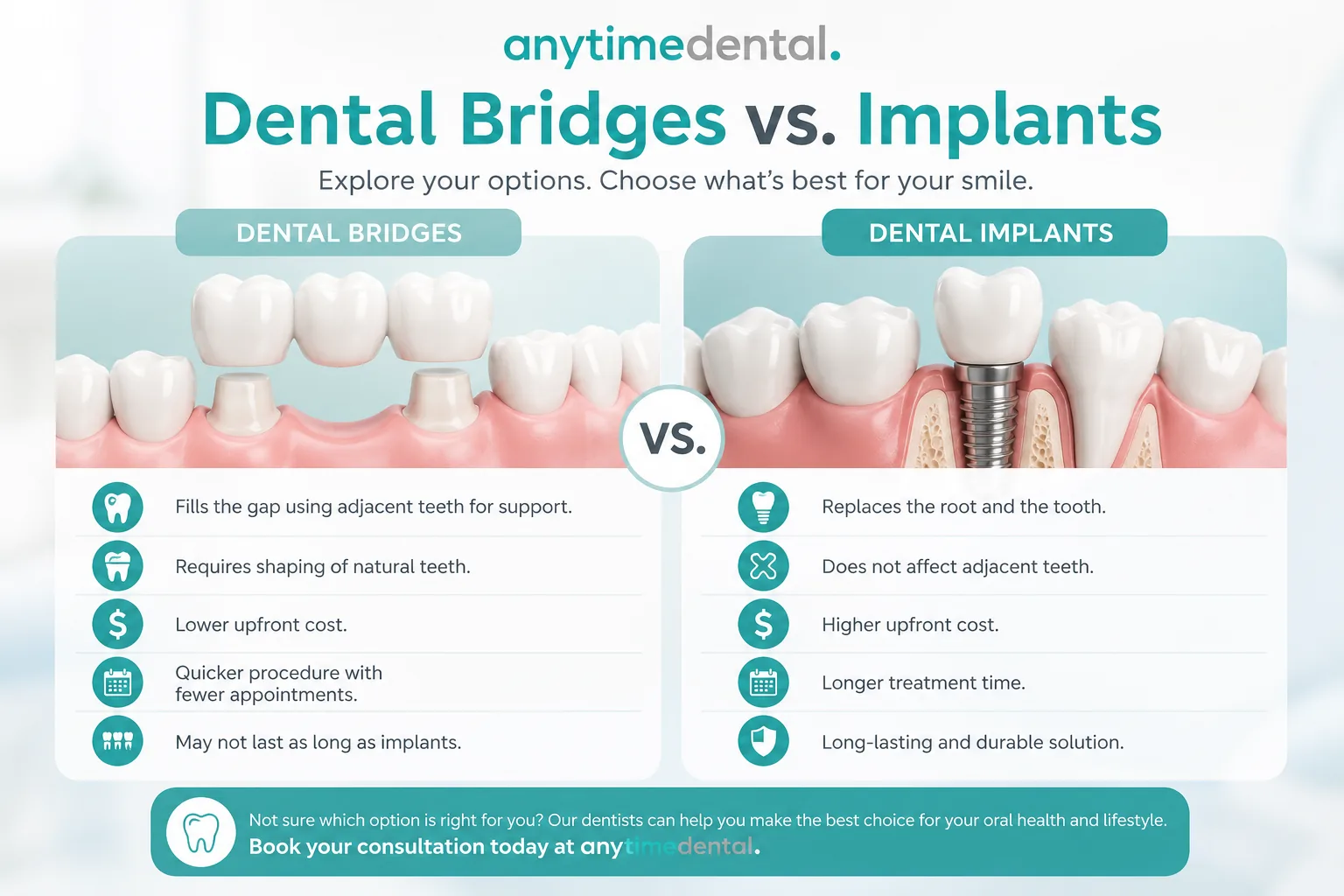
Dental implants are not the cheapest option upfront, but when you divide the cost over decades of service, they are often the most economical. A bridge or denture may need replacing every 5 to 10 years; an implant generally does not. We also believe in transparent pricing — at your consultation, we walk you through every part of the treatment plan and your payment options before you commit to anything.
What does daily life look like with implants?
Almost identical to life with your natural teeth. You brush twice a day, floss once a day, and come in for your regular check-ups. There is no slipping, no clicking, no taking anything out at night. You can eat steak, apples, nuts — whatever you used to enjoy. Many of our implant patients tell us they forget they ever had a missing tooth.
Common concerns we hear
“Is the surgery painful?” Most patients report less discomfort than a wisdom tooth extraction. You will be numb during the procedure and given clear aftercare instructions for the days that follow.
“Will it look fake?” A well-placed implant restoration is genuinely indistinguishable from a natural tooth. Modern ceramic crowns match the colour, translucency, and shape of your surrounding teeth.
“What if I have multiple missing teeth?” We can place individual implants for each tooth, or use a smaller number of implants to support a bridge or even a full arch. Solutions like All-on-4 can replace an entire jaw of teeth with just four strategically placed implants.
The next step
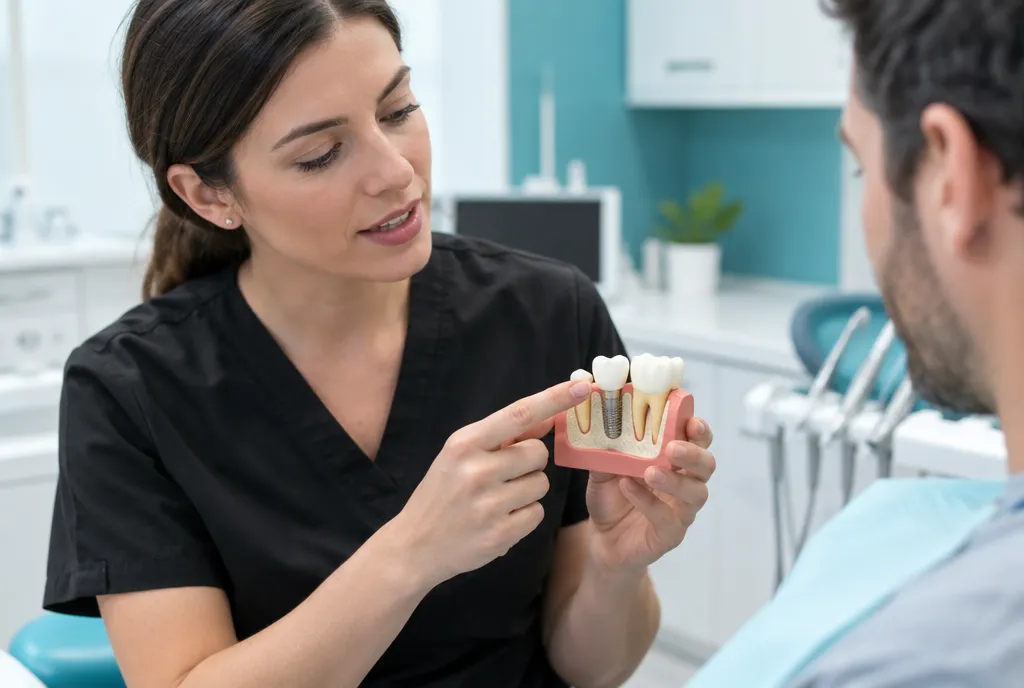
The only way to know for certain whether you are a candidate is a proper consultation, including a 3D scan of your jaw. At Anytime Dental in Deira, we offer no-pressure consultations where we walk you through your options — implants or otherwise — and help you make the decision that is right for you. If a missing tooth has been affecting how you eat, speak, or smile, do not let another year go by. Book a consultation and find out what is possible.
Related care at Anytime Dental
Related treatments at our clinics: dental crowns and current offers.
Read more about Dental Implants, Dental Bridges and Dentures. You can visit our Filipino-speaking dentists at our Deira (Al Rigga) clinic or our Barsha Heights clinic, open daily from 10 AM to 9 PM. Your first consultation is free.