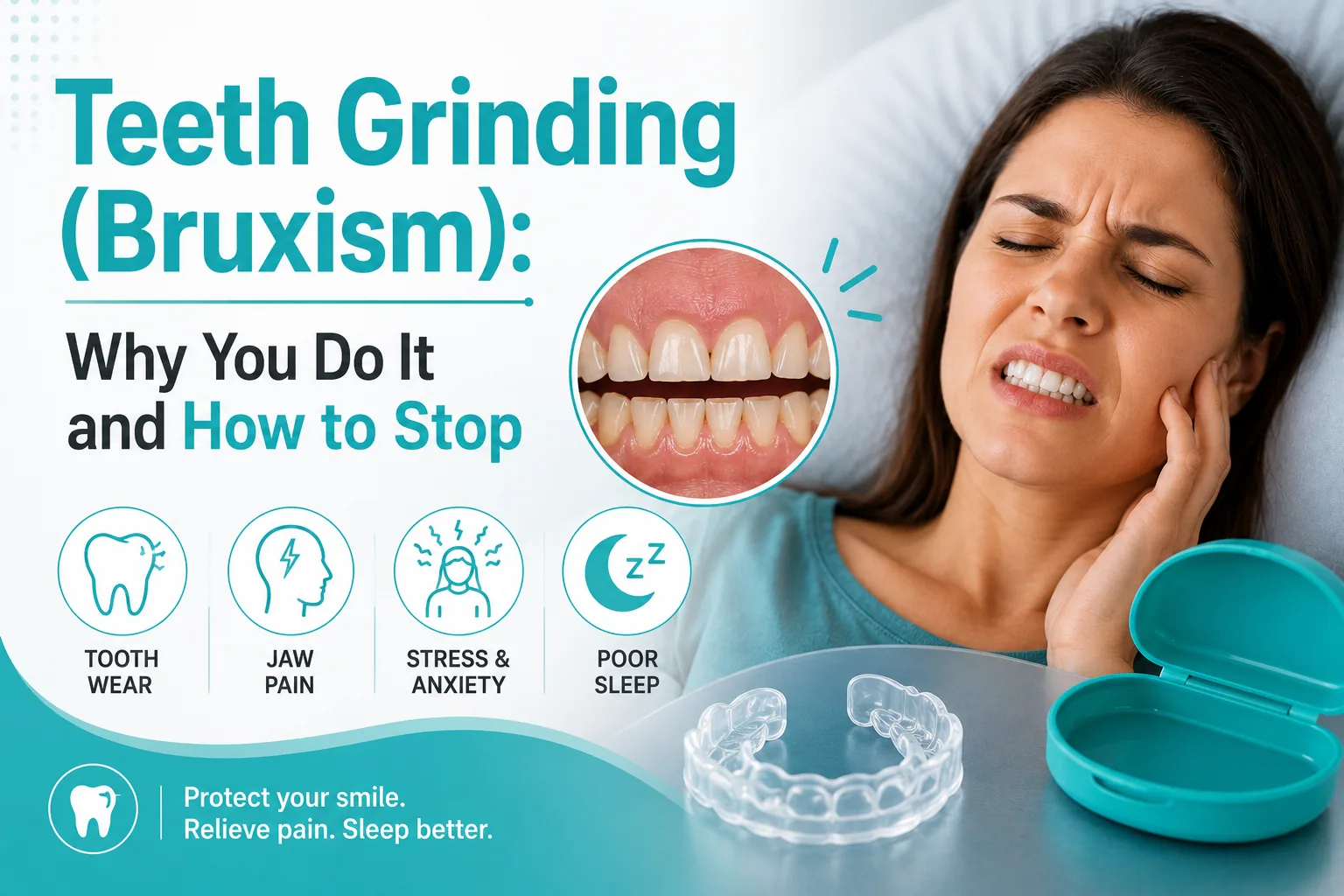

Have you noticed a clicking sound when you chew, woken up with a sore jaw, or felt headaches around your temples? You may be dealing with a TMJ disorder — a condition affecting the temporomandibular joint that connects your jaw to your skull.
What causes TMJ problems?
- Bruxism — grinding or clenching teeth, often during sleep
- Stress — tension in the jaw muscles, especially in busy professionals
- Misaligned bite — uneven pressure on the jaw joint
- Injury — trauma to the face or jaw
- Arthritis — inflammation of the joint itself
Common symptoms
- Jaw pain or tenderness
- Clicking, popping, or grating sounds when opening or closing your mouth
- Difficulty chewing
- Locking of the jaw
- Headaches, earaches, or facial pain
Treatment options
Most TMJ disorders respond to conservative treatment:
- Night guards — a custom-fit mouthguard that protects your teeth and relaxes the jaw muscles
- Stress management — relaxation techniques, posture correction, jaw exercises
- Physical therapy — targeted exercises to strengthen and stretch the jaw muscles
- Bite adjustment — minor reshaping of teeth or orthodontic treatment if misalignment is contributing
- Medication — anti-inflammatories or muscle relaxants for short-term relief
When to see a dentist
If you’ve had jaw pain or clicking for more than two weeks, don’t wait. Untreated TMJ disorders can lead to chronic pain, tooth damage from grinding, and changes in your bite. Book a TMJ assessment at Anytime Dental.
Related care at Anytime Dental
Read more about all our dental services. You can visit our Filipino-speaking dentists at our Deira (Al Rigga) clinic or our Barsha Heights clinic, open daily from 10 AM to 9 PM. Your first consultation is free.