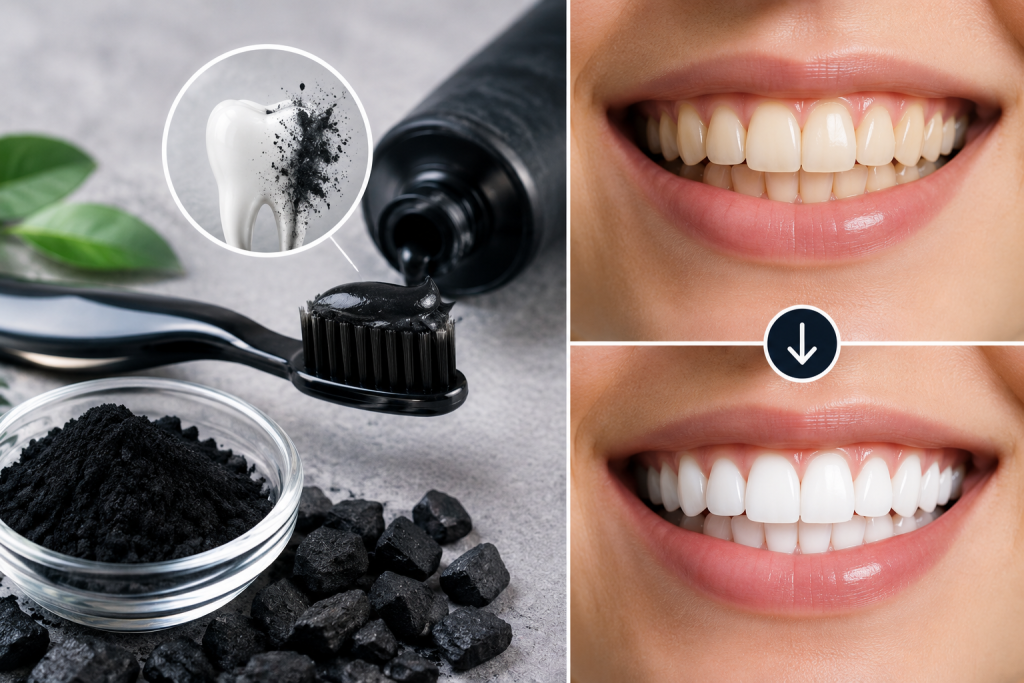
Scroll through any beauty or health feed and you’ll see influencers brushing their teeth with jet-black charcoal toothpaste, promising whiter teeth in days. But does it actually work — and more importantly, is it safe?
Where the trend comes from
Activated charcoal is highly absorbent and has been used in medicine for centuries to bind toxins. The idea behind charcoal toothpaste is that it lifts surface stains by adhering to them.
What it does — and doesn’t
Charcoal can remove some extrinsic stains — surface marks from coffee, tea, and red wine — which can give a short-term brightening effect. However, it cannot change the natural underlying colour of your teeth (intrinsic colour). For real, lasting whitening, professional treatments are far more effective.
The risks dentists worry about
- Enamel damage: Most charcoal toothpastes are highly abrasive. Repeated use wears down enamel — which cannot grow back — and exposes the yellow dentin underneath. So you may end up looking more yellow long-term.
- No fluoride: Many charcoal toothpastes don’t contain fluoride, which is essential for cavity prevention.
- Gum irritation: The abrasive texture can irritate gums and increase sensitivity.
- Not regulated: Whitening claims aren’t verified by dental associations.
What dentists recommend instead
- Regular brushing with a fluoride toothpaste
- Professional cleaning every 6 months
- In-clinic teeth whitening (faster, safer, longer-lasting)
- At-home whitening trays prescribed by your dentist
If you want a brighter smile, talk to us at Anytime Dental about a safe whitening plan instead of risking your enamel with viral trends.
Related care at Anytime Dental
Read more about Teeth Whitening and Teeth Cleaning. You can visit our Filipino-speaking dentists at our Deira (Al Rigga) clinic or our Barsha Heights clinic, open daily from 10 AM to 9 PM. Your first consultation is free.