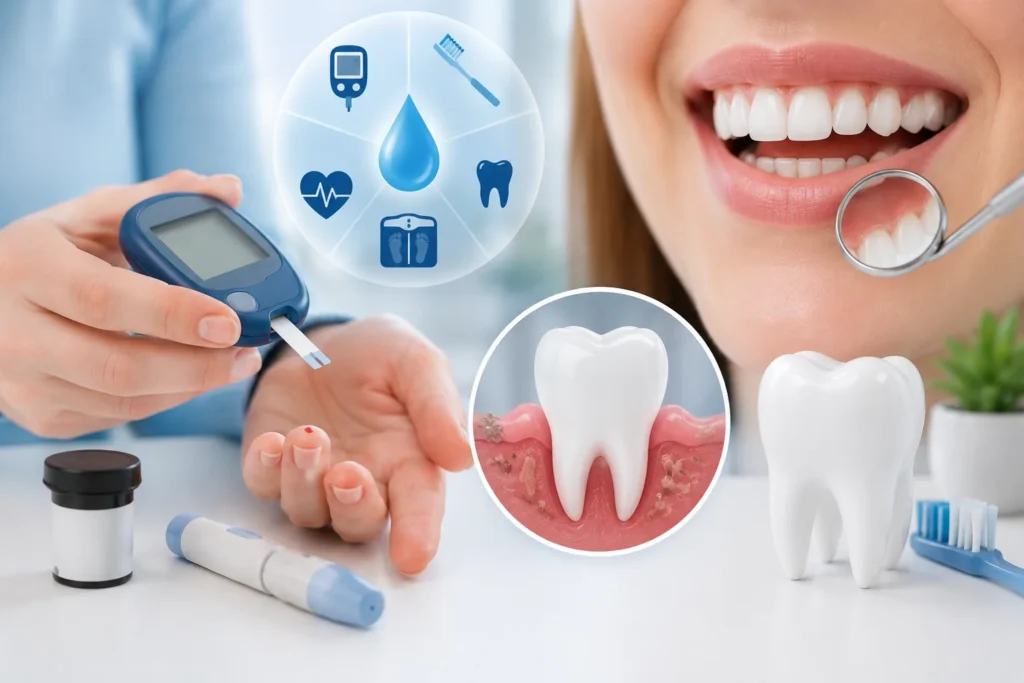
If you’re managing diabetes — or supporting a family member who is — knowing the link between blood sugar and oral health is essential. The connection isn’t one-way: diabetes affects your mouth, and your mouth can affect your diabetes.
How diabetes affects your mouth
- Higher gum disease risk: Elevated blood sugar feeds bacteria, increasing the risk of gingivitis and periodontitis
- Dry mouth: Reduced saliva production leads to more cavities and oral infections
- Slower healing: Cuts, extraction sites, and post-procedure recovery take longer
- Fungal infections: Higher risk of oral thrush, especially for those on certain medications
- Taste changes: Some diabetic patients report altered taste perception
How oral health affects diabetes
The relationship is reciprocal. Severe gum disease can make it harder to control blood sugar because inflammation in the mouth raises systemic inflammation, increasing insulin resistance. Treating gum disease has been shown to improve HbA1c levels in many patients.
What you can do
- Tell your dentist you have diabetes and share your latest HbA1c
- Aim for cleanings every 3–4 months instead of every 6
- Brush 2× a day with a soft-bristle brush, floss daily
- Stay hydrated — sip water often to combat dry mouth
- Monitor for bleeding gums, persistent bad breath, or loose teeth — call us immediately if you spot them
- Time procedures wisely — morning appointments are often better when blood sugar is stable
We work with your medical team
At Anytime Dental we’re experienced in caring for patients with diabetes and coordinate with your physician where needed. A proactive dental plan is one of the best things you can do for your overall health.
Related care at Anytime Dental
Read more about Scaling & Polishing and Teeth Cleaning. You can visit our Filipino-speaking dentists at our Deira (Al Rigga) clinic or our Barsha Heights clinic, open daily from 10 AM to 9 PM. Your first consultation is free.