Your child’s relationship with the dentist begins long before they can read the eye chart in the corner of the waiting room. The habits, attitudes, and routines they form in their earliest years shape how they care for their teeth for the rest of their lives. As parents, we want our children to grow up with strong, healthy smiles — and pediatric dentistry is the path that gets them there. Here’s a complete parent’s guide to children’s dental care, when to start visits, and what to expect.
When Should the First Dental Visit Happen?
The American Academy of Pediatric Dentistry and most dental associations worldwide recommend that a child see a dentist by their first birthday, or within six months of their first tooth appearing — whichever comes first. Many parents are surprised by how early that is, but the reasoning is solid.
Early visits aren’t really about treating problems. They are about prevention, education, and helping your child get comfortable with the dental environment before any treatment is ever needed. Your dentist will examine your child’s mouth for proper development, look for early signs of decay, give you advice on feeding and brushing, and make sure you know what to expect over the next year.
Why Baby Teeth Matter
It is easy to dismiss baby teeth as temporary — they fall out anyway, right? But these primary teeth play important roles beyond simply chewing. They help your child speak clearly, guide the permanent teeth into the right positions, and shape the development of the jaw. Untreated decay in baby teeth can cause pain, infection, and damage to the developing permanent teeth still inside the gums.
Treating baby teeth properly is an investment in the adult smile that will follow.
The First Visit: What to Expect
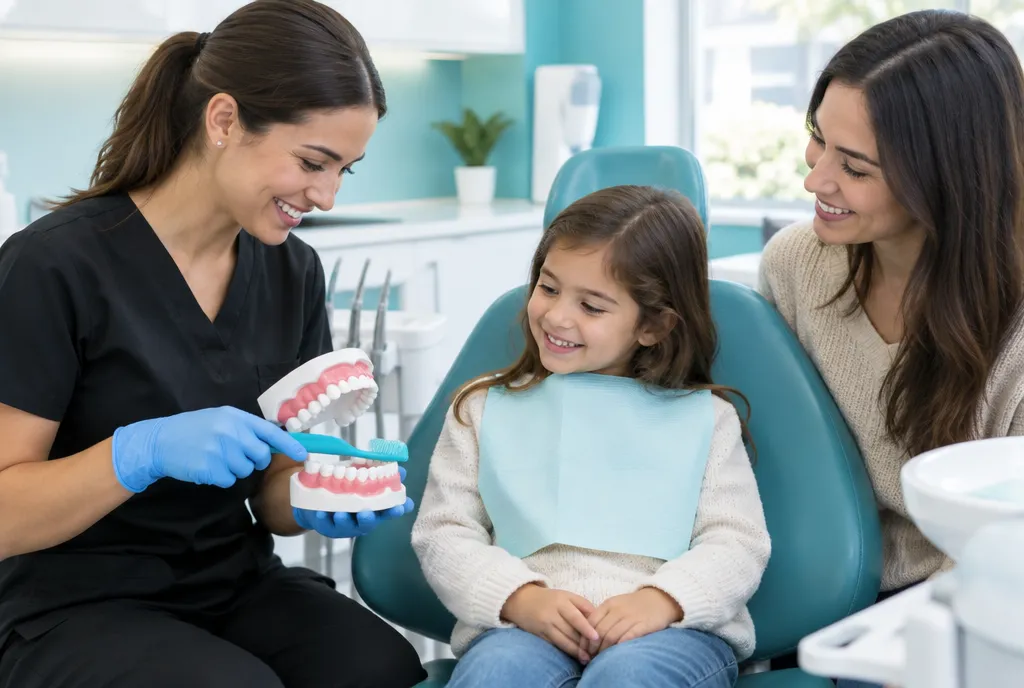
A first dental visit for a one- or two-year-old is short and gentle. The dentist may have you hold your child in your lap and examine their teeth while they lie back against you — a “knee-to-knee” exam. The dentist counts the teeth, looks for any developmental concerns or early decay, may gently clean the teeth with a soft brush, and applies a fluoride varnish if appropriate.
For parents, the visit is just as much about learning. Your dentist will discuss tooth-friendly nutrition, when and how to brush your child’s teeth, how to manage thumb-sucking and pacifier habits, and what fluoride exposure is appropriate. You will leave with a clear plan for keeping your child’s mouth healthy until the next check-up — usually in six months.
Building a Healthy Routine at Home
Start cleaning your baby’s mouth before any teeth appear by wiping the gums with a soft, damp cloth after feedings. Once the first tooth emerges, brush twice a day with a soft-bristled infant toothbrush and a smear (rice-grain size) of fluoride toothpaste. From age three to six, increase the amount to a pea-sized portion and supervise brushing so they don’t swallow it.
Children typically lack the dexterity to brush effectively on their own until around age seven or eight. Until then, you should brush their teeth for them, or do a thorough follow-up after they have brushed. Flossing should begin when any two teeth touch each other — usually around age two or three for the back teeth.
Foods That Help and Foods That Harm
Cavities are caused by bacteria that feed on sugars and produce acid that erodes enamel. Limiting sugary snacks, juices, and sticky candies dramatically reduces your child’s risk. But it isn’t just about quantity — it’s about frequency. Sipping juice from a bottle throughout the afternoon is far more damaging than drinking a single glass with a meal, because the teeth are bathed in sugar for hours.
Tooth-friendly snacks include cheese, plain yogurt, raw vegetables, apples, nuts (for older children), and water as the everyday drink. Try to keep sweet treats to mealtimes and follow them with water or, ideally, a quick tooth-brush.
Common Pediatric Dental Concerns
Thumb-sucking and pacifier use. Most children stop on their own between ages two and four. If the habit continues past age four or five, talk to your dentist — prolonged habits can affect tooth alignment and palate shape.
Teething. The discomfort of new teeth coming in is normal. A clean, chilled (not frozen) teething ring, a damp washcloth, or gentle gum massage can help. Avoid teething gels that contain benzocaine, which can be dangerous for infants.
Early childhood caries. Often called “bottle rot,” this is a pattern of decay seen in toddlers who fall asleep with a bottle of milk, formula, or juice. To prevent it, avoid putting your child to bed with anything but water, and clean their teeth before sleep.
Dental anxiety. Pediatric dentists are trained in techniques that help children feel safe and in control. The earlier a child begins regular visits, the less anxious they tend to be.
The Role of a Pediatric Dentist
A pediatric dentist completes additional years of specialty training focused on the unique needs of infants, children, teens, and patients with special needs. They are skilled in age-appropriate communication, behavior management, growth and development monitoring, and treating dental problems in the smallest mouths. The clinic environment is usually designed to be welcoming and child-friendly, which makes a real difference in how children perceive dentistry.
A general or family dentist can also provide excellent care for children, especially ones who have grown up comfortable in their family clinic. The key is finding a dentist who genuinely enjoys working with kids and creates a calm, positive atmosphere.
Preventive Treatments to Ask About
Two preventive treatments significantly reduce cavity risk in children. Dental sealants are thin, protective coatings painted onto the chewing surfaces of permanent molars to prevent decay in the deep grooves where toothbrushes can’t always reach. Fluoride varnish, applied two to four times a year, strengthens enamel and helps reverse very early decay. Both are quick, comfortable, and well-supported by decades of research.
Setting the Tone for a Lifetime
The way you talk about the dentist at home matters as much as the visits themselves. Avoid words like “hurt,” “shot,” or “drill” — even saying “you don’t have to be scared” plants the idea that there’s something to fear. Instead, frame the visit positively: the dentist counts teeth, looks for sugar bugs, and helps keep your smile strong.
Read children’s books about dental visits, play “dentist” at home, and let your child see you take care of your own teeth. Children pick up your attitudes — make sure the ones they pick up are healthy.
The Bottom Line
Pediatric dental care isn’t about fixing problems — it’s about preventing them and shaping a positive relationship with oral health that lasts a lifetime. Schedule your child’s first dental visit early, build consistent routines at home, and make the dentist a friendly, expected part of growing up. The bright, confident smile you’ll see in family photos for years to come is well worth it.
Related care at Anytime Dental
Related treatments at our clinics: braces and clear aligners.
Read more about Teeth Cleaning. You can visit our Filipino-speaking dentists at our Deira (Al Rigga) clinic or our Barsha Heights clinic, open daily from 10 AM to 9 PM. Your first consultation is free.