A bright, white smile can make your teeth look brighter. In Dubai, where first impressions matter — at work, social events, and on social media — professional teeth whitening has become one of the most requested cosmetic dental treatments. But what does the process actually involve, and is it worth choosing professional whitening over the at-home kits sold in pharmacies? Here is a complete look at what to expect when you book a whitening appointment with a qualified dentist in Dubai.
Why Teeth Become Stained in the First Place
Tooth discoloration falls into two broad categories. Extrinsic stains sit on the outer enamel surface and are caused by what you eat, drink, and smoke — coffee, black tea, red wine, curry, dark berries, cola, and tobacco are the biggest culprits. Intrinsic stains form within the tooth itself, often due to aging, certain medications taken in childhood (like tetracycline), trauma to a tooth, or excessive fluoride exposure during tooth development.
Professional whitening is highly effective on extrinsic stains and can lighten many intrinsic stains as well, though the latter sometimes require alternative treatments like veneers or bonding.
Professional vs. Over-the-Counter Whitening
Pharmacy whitening strips, pens, and toothpastes use low concentrations of peroxide — typically around 3 to 6 percent. They can produce mild brightening over several weeks, but results are limited and uneven coverage is common. Professional in-office whitening uses peroxide gels in the 25 to 40 percent range, applied under controlled conditions with gum protection and often activated by a special light. The result: faster, more dramatic, and longer-lasting whitening, with far less risk of damaging soft tissue.
Your First Consultation
Before any whitening procedure, your dentist will examine your mouth thoroughly. This is essential because whitening only works on natural tooth enamel — it does not change the color of crowns, veneers, fillings, or bonding. If you have visible dental work in the smile zone, your dentist will explain how your final smile will look once your natural teeth are whitened and discuss whether replacements are needed for any mismatched restorations.
Your dentist will also check for cavities, gum disease, exposed tooth roots, and enamel erosion. Whitening on unhealthy teeth can cause significant pain and sensitivity, so any underlying problems are typically treated first. A professional cleaning is usually recommended before whitening to remove plaque and surface debris so the gel can work evenly across all surfaces.
The In-Office Whitening Procedure
The actual treatment usually takes between 60 and 90 minutes. Your dentist will start by placing a cheek retractor in your mouth, then apply a protective barrier — either a rubber dam or a paint-on liquid resin — over your gums to prevent the bleaching gel from touching soft tissue. The high-concentration peroxide gel is then painted onto the front surfaces of your teeth.
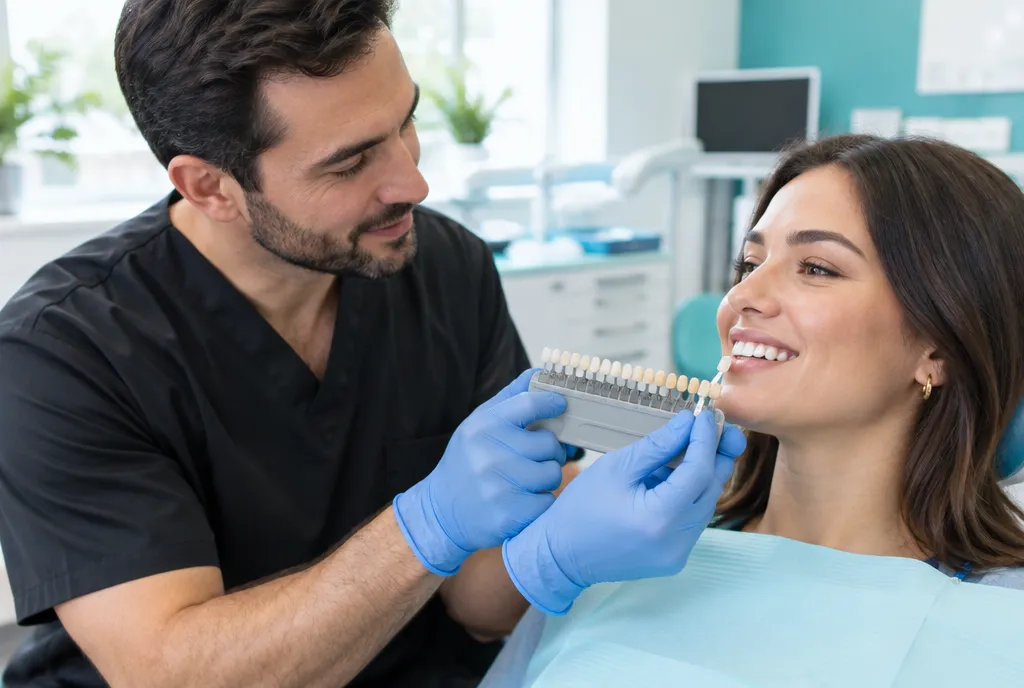
Many clinics use an LED, laser, or halogen light to accelerate the chemical reaction. The gel sits on the teeth for 15 to 20 minutes, then is wiped off and reapplied — usually two or three cycles in total. After the final cycle, the gel and barrier are removed, and your teeth are polished. Results are visible immediately, with most patients seeing teeth lighten by four to eight shades on the standard dental whitening scale.
Take-Home Whitening Trays
Some dentists offer a custom take-home alternative, either on its own or combined with an in-office session. You receive personalized trays molded to fit your teeth and a moderate-strength gel — typically around 10 to 16 percent peroxide. You wear the trays for 30 minutes to a few hours per day (or overnight, depending on the gel) for one to two weeks. This approach takes longer but allows gradual whitening and easier control of sensitivity.
What to Expect Afterward
The most common side effect is temporary tooth sensitivity, especially to cold temperatures. This is normal and usually fades within 24 to 72 hours. Your dentist may give you a desensitizing gel or recommend a toothpaste formulated for sensitive teeth. Mild gum irritation is also possible if any gel contacted the gumline; it resolves quickly on its own.
For the first 48 hours after whitening, your teeth are more porous and prone to picking up new stains. This is known as the “white diet” window: stick to light-colored foods like rice, chicken, fish, yogurt, pasta with white sauce, and cauliflower. Avoid coffee, tea, red wine, dark sauces, berries, and tobacco. After two days, you can return to your usual diet — though smart long-term habits will protect your results.
How Long Do Results Last?
Professional whitening typically lasts between one and three years, depending on your diet and oral hygiene. Touch-up sessions every 6 to 12 months can maintain peak brightness. Patients who frequently consume staining foods or smoke will see results fade faster than those who don’t.
To extend your results, drink staining beverages through a straw, rinse with water after meals, brush twice daily with a whitening toothpaste once or twice a week, and keep up with professional cleanings every six months.
Who Should Avoid Whitening?
Whitening is not recommended during pregnancy or breastfeeding, for people under 16 (when teeth are still developing), or for anyone with severe gum disease, untreated cavities, or extensive enamel erosion. People with very sensitive teeth may need a modified approach. A qualified dentist will assess your situation honestly and recommend the right path forward.
Is It Worth It?
For most patients seeking a noticeably brighter smile in a single appointment, professional teeth whitening offers excellent value. It is safe when performed by a trained dentist, the results are predictable, and results vary from person to person. If you are considering whitening, the best first step is a consultation — your dentist can confirm whether you are a good candidate and explain exactly what your smile will look like once the treatment is complete.
Related care at Anytime Dental
Related treatments at our clinics: current offers.
Read more about Teeth Whitening and Teeth Cleaning. You can visit our Filipino-speaking dentists at our Deira (Al Rigga) clinic or our Barsha Heights clinic, open daily from 10 AM to 9 PM. Your first consultation is free.