Straight teeth are easier to clean, less prone to cavities, and great for confidence. But should you go with Invisalign clear aligners or traditional braces? Both work — the right choice depends on the complexity of your case, your lifestyle, and your budget.
Traditional braces
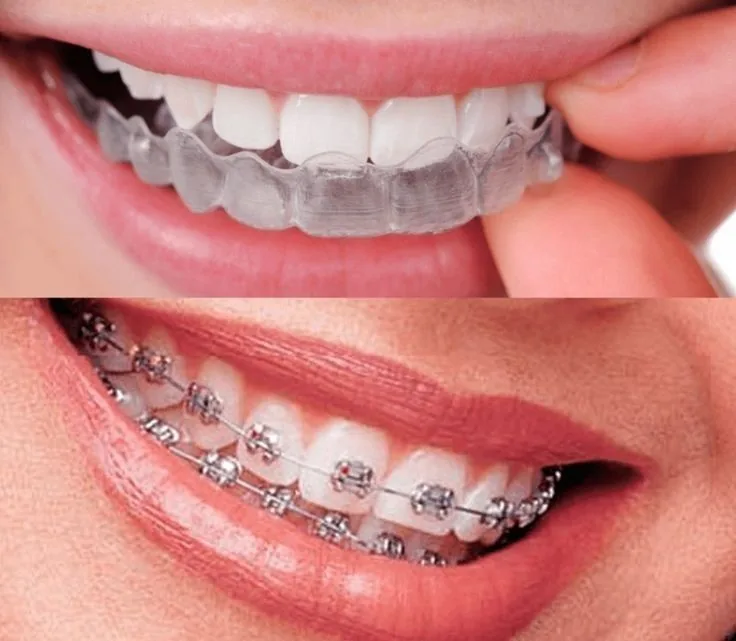
Metal or ceramic brackets bonded to your teeth, connected by archwires the orthodontist adjusts over time. They’re the gold standard for complex cases — severe crowding, bite issues, or significant rotations.
Invisalign
A series of clear, removable aligners that gradually shift your teeth. They’re nearly invisible and you take them out to eat, brush, and floss. Best for mild to moderate cases.
Comparing the two
- Visibility: Braces are noticeable. Invisalign is nearly invisible.
- Comfort: Braces can irritate the cheeks early on. Invisalign is smooth but takes some adjustment.
- Eating: Braces require avoiding sticky/hard foods. With Invisalign you remove the trays — no food restrictions.
- Cleaning: Braces make brushing trickier. Invisalign comes out so it’s easier to maintain hygiene.
- Treatment time: Both typically 12–24 months.
- Discipline: Invisalign only works if you wear it 20–22 hours/day.
Which is right for you?
If you want a discreet option, your case is mild-to-moderate, and you can commit to wearing trays consistently — Invisalign is excellent. If your case is more complex or you’d rather not worry about removing trays, traditional braces are highly reliable.
At Anytime Dental we offer both. Book a consultation and we’ll show you a 3D simulation of your future smile.