
Having a tooth taken out is a common dental procedure, and the first few days afterwards make a real difference to how comfortably the area heals. This guide explains what is normal, what to eat, what to avoid and when to call your dentist. It is general information only. Your dentist will give you instructions for your own case, and those always come first.
The first 24 hours
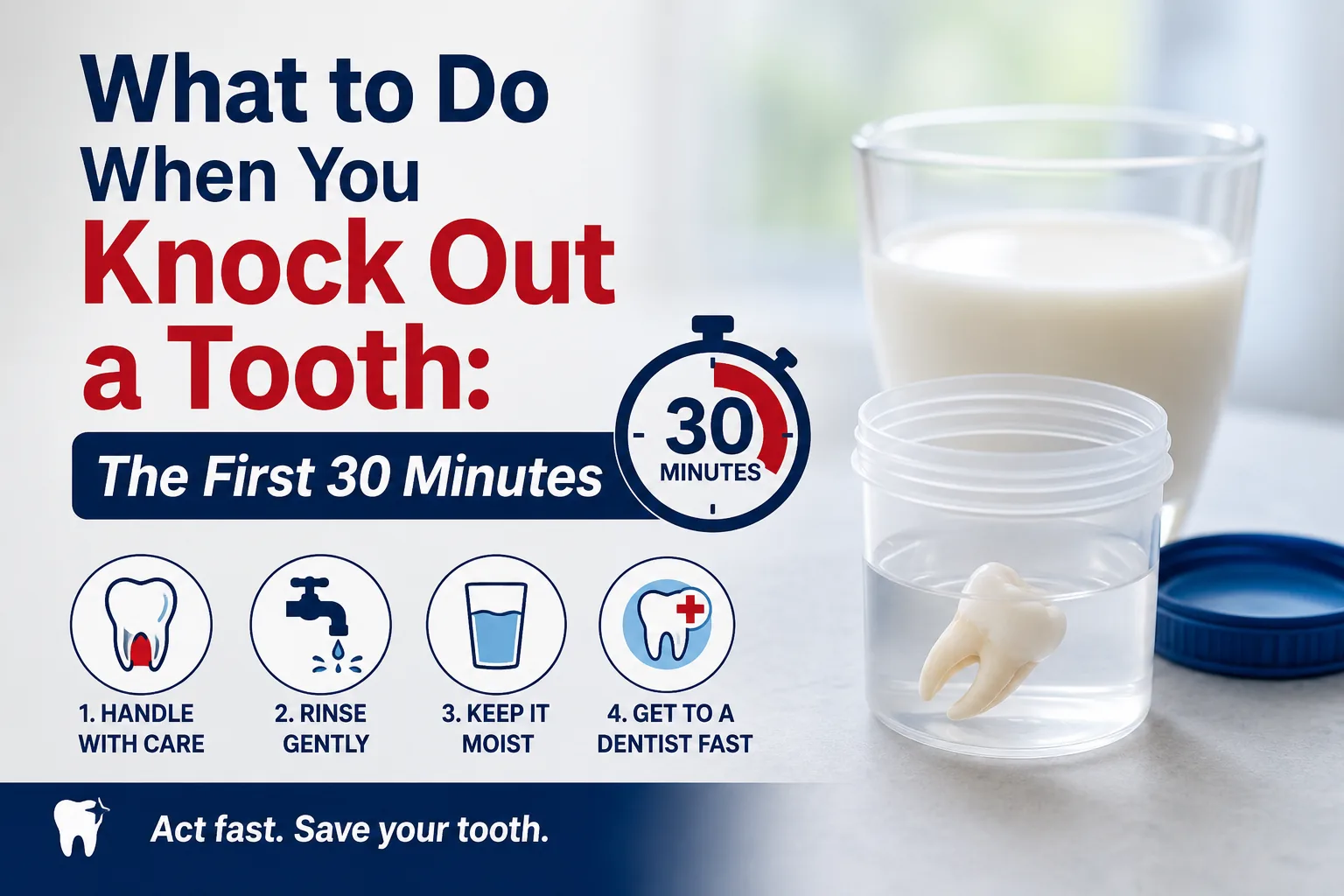
After an extraction, a blood clot forms in the empty socket. That clot protects the bone and nerve underneath and is the start of healing, so most first-day advice is about keeping it in place.
- Keep biting gently on the gauze for the time your dentist advised, usually 30 to 60 minutes.
- Rest and keep your head slightly raised when lying down.
- Do not rinse, spit forcefully or use a straw on the first day. Suction and pressure can loosen the clot.
- Avoid touching the area with your tongue or fingers.
- Take any medicine only as your dentist or pharmacist directed.
- A cold pack on the cheek, 10 to 15 minutes on and then off, can help with swelling during the first day.
What to eat after a tooth extraction
For the first day or two, choose soft, cool or lukewarm foods that need little chewing. Chew on the other side of your mouth.
- Yoghurt, laban and soft cheese
- Mashed potato, soft rice or congee
- Scrambled eggs
- Soup that has cooled to lukewarm
- Smoothies eaten with a spoon, not a straw
- Soft fruit such as banana or ripe mango
Avoid very hot drinks, spicy food, crunchy snacks, nuts, seeds and anything chewy for the first few days, as they can irritate the socket or get stuck in it. Most people can slowly return to their usual food over about a week, depending on the tooth and how the area is healing.
Staying hydrated in the Dubai heat
Dubai weather means you lose fluids quickly, and a dry mouth is not comfortable while you heal. Sip plenty of water from a glass during the day. Skip alcohol and fizzy drinks for the first couple of days. If you are fasting, speak to your dentist about timing your extraction and your aftercare around your meals.
Smoking and vaping
Smoking, shisha and vaping slow healing and raise the risk of dry socket, because the suction and the chemicals can disturb the clot. Ask your dentist how long to wait. Many people find this a good moment to cut down.
Cleaning your mouth while it heals
- Keep brushing your other teeth on the first night, carefully avoiding the extraction site.
- From the second day, your dentist may suggest gentle warm salt water rinses after meals. Let the water fall out of your mouth rather than spitting hard.
- Return to normal brushing around the area as it becomes comfortable, using a soft brush.
What is normal and what is not
Some discomfort, mild swelling and a little oozing of blood in the first day or two are expected. Swelling often peaks around the second or third day and then settles. Like any procedure, extraction has risks, including bleeding, infection, dry socket and, for some lower back teeth, temporary or rarely longer lasting numbness of the lip or tongue. Your dentist will explain the risks that apply to you before treatment.
Dry socket happens when the clot is lost or does not form properly. It usually shows up two to four days after the extraction as pain that gets worse instead of better, sometimes spreading towards the ear, often with a bad taste or smell. It needs to be seen by a dentist, who can clean and dress the socket.
Contact your dentist if you notice:
- Bleeding that does not slow down after firm pressure on gauze for 30 minutes
- Pain that increases after the third day
- Swelling that keeps growing, fever, or pus
- Numbness that has not gone away after the anaesthetic should have worn off
- Difficulty swallowing or breathing (seek urgent care straight away)
Replacing the missing tooth
If the tooth was not a wisdom tooth, ask your dentist about replacement once healing is underway. Leaving a gap can let nearby teeth drift over time. Options may include a dental implant, a bridge or a denture, depending on your mouth and your preferences. For wisdom teeth, read our guide to wisdom teeth removal and recovery.
Tooth extraction at Anytime Dental
Our dentists assess the tooth first, with in-house X-ray where needed, and talk you through the options, risks and aftercare before any treatment. Consultation is free, and the final price is confirmed after your consultation. You can learn more on our tooth extraction page.
Both branches are open daily from 10 AM to 9 PM, walk-ins are welcome and our team speaks English and Tagalog:
- Barsha Heights (Tecom): Unit 903, 9th Floor, Al Shafar Tower 1, near Dubai Internet City Metro Exit 1, next to Al Barsha.
- Deira, Al Rigga: Office 835, 8th Floor, Al Ghurair Office Tower, inside Al Ghurair Centre (Entrance 3), near Al Rigga and Union Metro.
Call 04 344 3882 or WhatsApp +971 55 791 6602. We accept cash, card, Tabby and Tamara. Insurance is on a reimbursement basis.
Frequently asked questions
How long does it take to heal after a tooth extraction?
The gum usually feels much better within one to two weeks. The bone underneath takes longer to fill in. Healing time depends on the tooth, how it was removed and your general health, so your dentist will tell you what to expect.
When can I eat normally after a tooth extraction?
Stick to soft foods for the first day or two and chew on the other side. Most people return to their usual diet over about a week, as the area becomes comfortable.
Can I drink with a straw after an extraction?
Avoid straws for the first few days, because the suction can dislodge the blood clot and lead to dry socket. Drink from a glass instead.
How do I know if I have dry socket?
Dry socket often appears two to four days after the extraction as pain that gets worse rather than better, sometimes with a bad taste or smell. Contact your dentist so they can check and treat the socket.
Do you accept walk-ins for tooth extraction?
Yes, walk-ins are welcome at both branches, open daily 10 AM to 9 PM. Your dentist will assess the tooth first and confirm whether extraction is the right option.
This article is general information and does not replace advice from your own dentist.